.png)
What Clay’s New Pricing Model Means for GTM Teams & Why Separating Your Orchestration Layer Matters
Why GTM teams should stop letting lead-gen tools double as their orchestration brains.
March 18, 2026

Hey there, fellow market leaders! If you’ve been monitoring tools in the marketing and sales enablement space, you likely came across Clay’s recent pricing announcement in March. It’s sparked quite a conversation and some real frustration across Reddit forums and beyond.
This week, I want to talk about the implications of these changes on your go-to-market setups, the importance of reevaluating your tech stack architecture, and how separating your orchestration layer from your customer data platform (CDP) can save both your sanity and your budget.
The New Pricing Shockwave: What’s Happening with Clay?
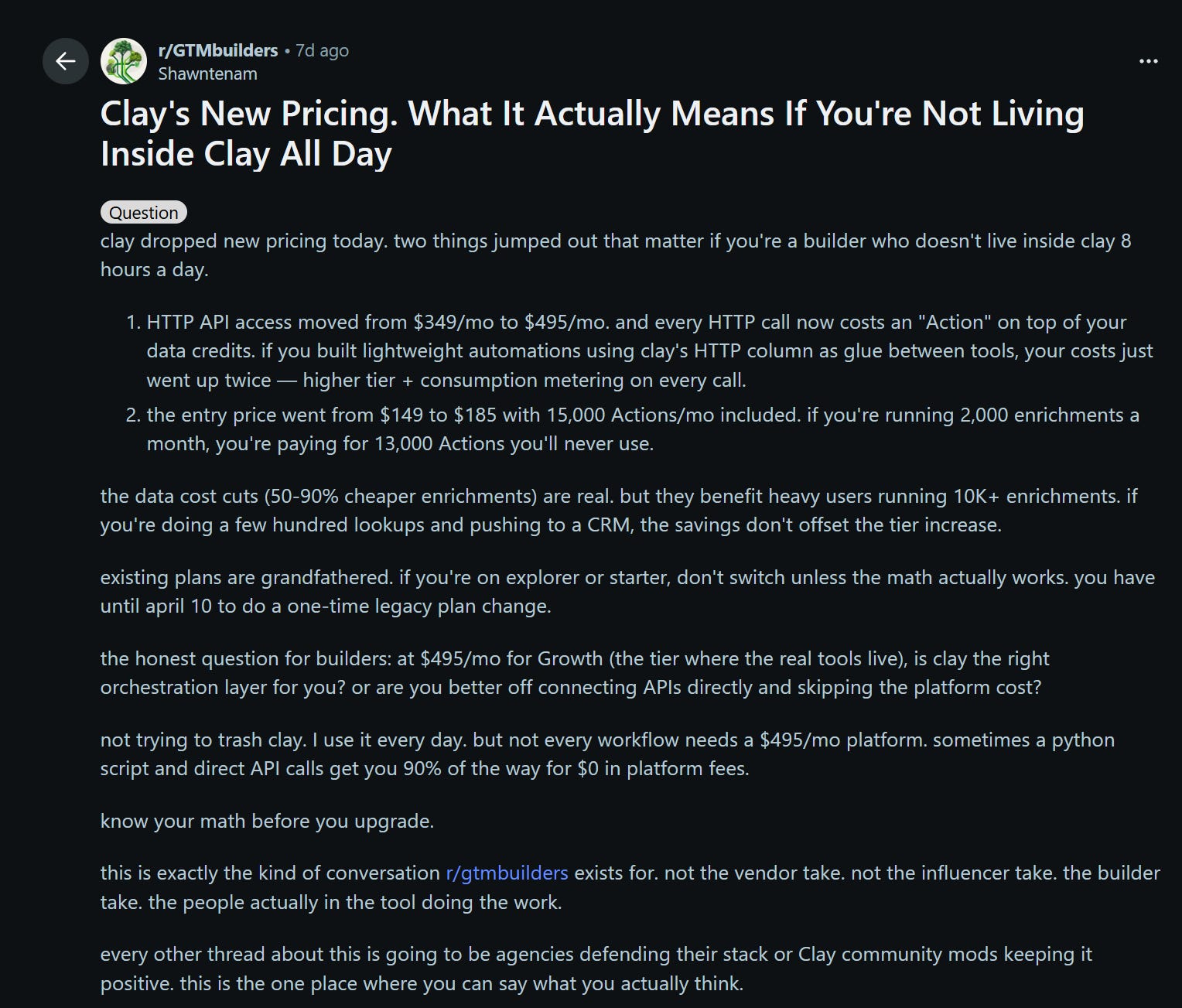
Clay’s pivot in its pricing model has stirred up strong reactions in the GTM community. A quick peek at Reddit’s r/GTMbuilders shows threads with users sharing stories of unexpectedly steep bills and candid takes on how this disrupts their workflows. The backbone of the criticism? The way Clay now bundles campaign orchestration and lead generation under a single pricing umbrella, often inflating costs for teams relying heavily on orchestration without needing broader lead generation services.
Data is cheaper on paper, but orchestration is now explicitly monetized via Actions. Every CRM sync, HTTP API call, Claygent workflow, and many background operations now burn Actions instead of feeling “free.”
This model shift has left many feeling squeezed, wondering if there’s a smarter, more cost-effective way to orchestrate campaigns without hemorrhaging dollars.
Why Separating Your Orchestration Layer From Your CDP Matters
This is the core insight I want to spotlight. You should not entangle your orchestration layer, which essentially coordinates your GTM campaigns, with your CDP, which houses your customer data. Combining these two functions under one pricey platform can seriously limit your business economics. You end up paying for layers you don’t fully use and lose flexibility when you want to swap tools or scale selectively.
When you entangle these layers:
- You pay for overlapping capabilities: a CDP/CRM to store data, plus a lead‑gen tool that’s also acting as your workflow engine.
- You reduce swap‑ability: changing data vendors or tools means rewriting the workflows that power your GTM motion.
- You accept vendor risk: a single pricing change forces big architectural decisions on your team, often under pressure.
A cleaner pattern is:
- CDP/CRM = source of truth for accounts, contacts, and history.
- Orchestration = neutral brain that runs GTM logic across tools.
- Lead‑gen / enrichment = replaceable inputs that feed signals into orchestration.
At UX Brite, we champion the idea of a clean separation. Your orchestration system should plug seamlessly into your existing customer data infrastructure. This way, orchestration becomes more agile and budget-friendly, while your CDP remains your single source of truth for customer insights.
By decoupling, you gain:
- Cost control: Pay only for what you need in its proper place; no hidden fees for overlapping functionality.
- Flexibility: Easily integrate new tools or swap platforms without ripping apart your entire GTM stack.
- Efficiency: Streamline campaign workflows without duplicating data or creating bottlenecks.
A Friendly Alternative for the Frustrated GTM Crew
If you’re among those feeling the pinch, remember you’re not without options. Tools like UX Brite’s GTM Platform serve as dedicated orchestration platforms built to handle the complexities of campaign execution while easily plugging into your CRM and CDP. We focus on marketing orchestration & automation exclusively—letting you keep your core customer data platform intact and cost-effective.
This approach means you can orchestrate every customer touchpoint, automate campaign workflows, and maintain control—all without unexpected price hikes. Plus, the integration is smooth, so no painful data migrations or convoluted API gymnastics. One click of a button and your marketing tool is integrated—no sharing passwords and support for bringing your own API tokens.
Are you GTM marketing or sales-enabled?
Marketing and sales are no doubt twins in the same peapod—but each one functions very differently. If you were using Clay as a primary sales enablement tool, I’d say it still has tons of outstanding value if you’re focused on customer data and lead generation. For marketing enablement, the equation changes significantly: understanding buyer journeys, orchestrating campaigns at scale, and creatingneed to understand buyer journeys, orchestrate campaigns at scale & create effective content are all core elements of the product marketing experience.
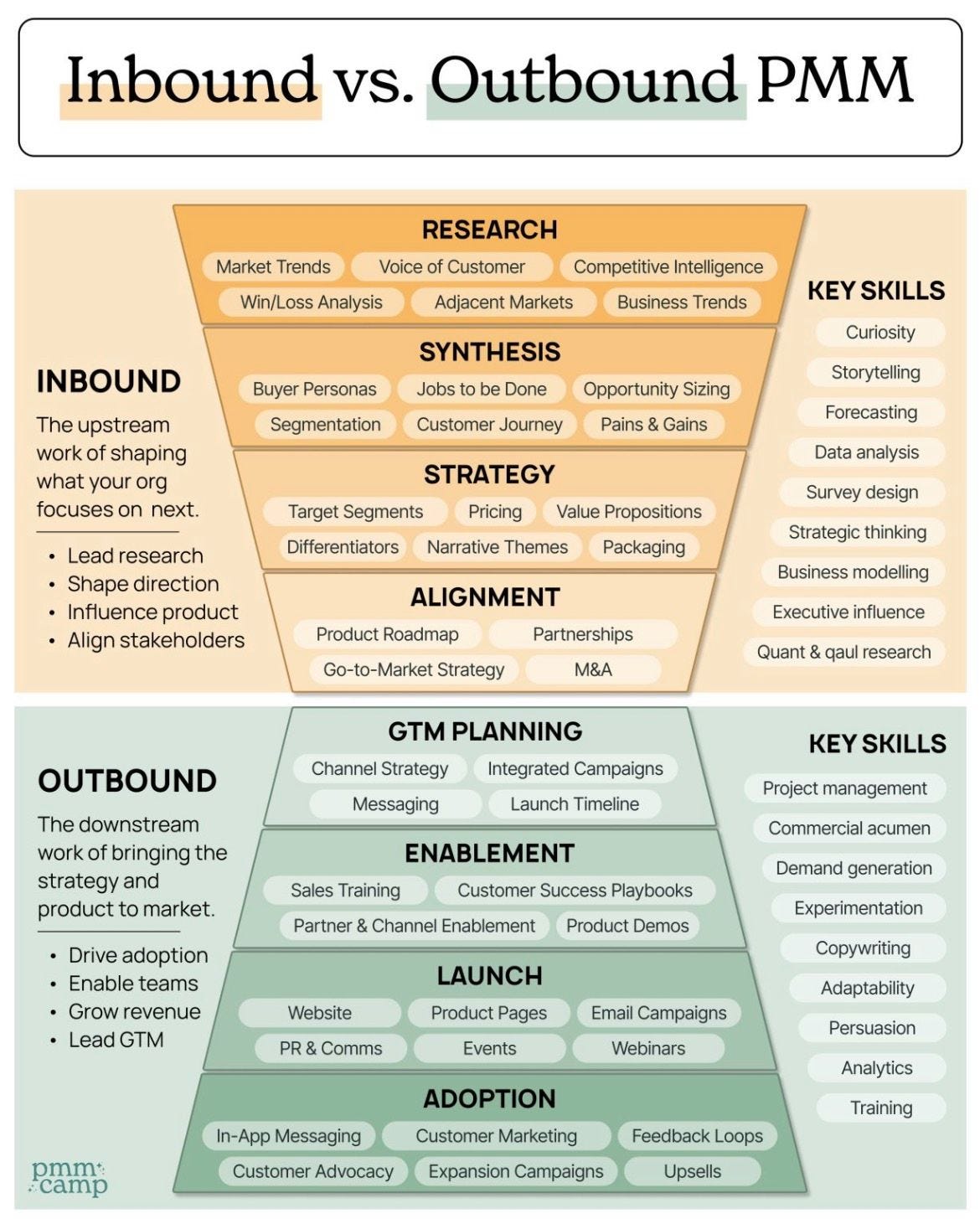
Picture courtesy of PMM Camp.
What’s Next?
In an evolving GTM tech landscape, staying adaptable is key. Tool pricing models will shift, new players will enter, and best practices will develop. Monitor the architecture of your stack closely and avoid making suboptimal decisions due to bundled pricing.
If you want to dive deeper into how orchestration and data layers should harmonize—while keeping your budget respectful—stay tuned for next week’s piece, where we’ll explore real-life GTM stacks excelling with a decoupled approach.
Start Building Your Go-to-Market Stack with UX Brite
Create Your Free Account: Sign Up for A 30-Day Free Trial
Thanks for stopping by, and here’s to smarter, leaner GTM strategies that give you control and clarity, not sticker shock. Until next time!
More Related Posts

Your Product Deserves World-Class Talent
Partner with our UX, developer, and marketing growth experts who bring clarity, speed, and measurable impact to every project.
Talk to Our GTM Experts
We create online experiences that delight users, market your products, and automate growth